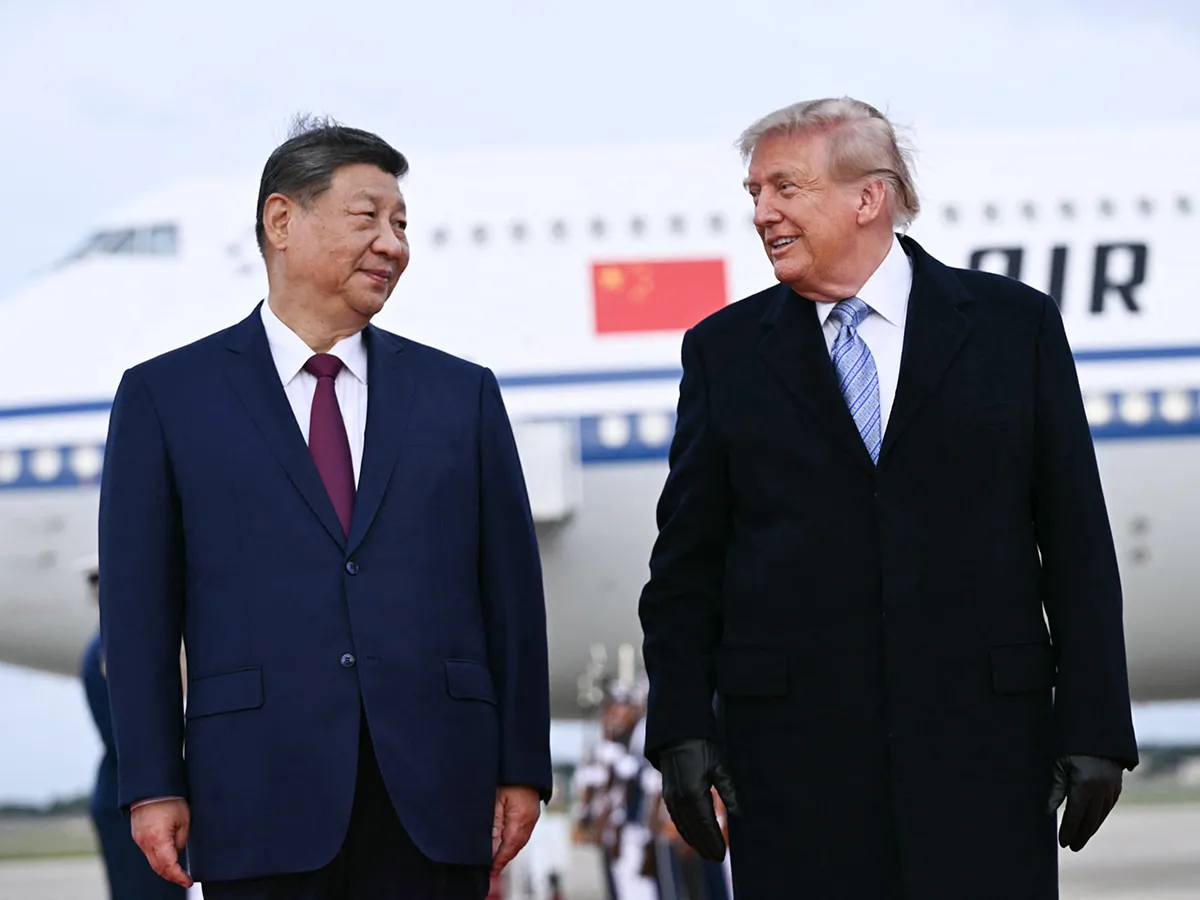
The United States and China have agreed to extend their fragile trade truce by two months, pushing the new deadline to January 10, 2027. Treasury Secretary Scott Bessent confirmed the extension on September 23, just as Chinese President Xi Jinping landed in Washington for a rare state visit.
The announcement came only hours before the original truce was due to expire on November 10. It buys both economies more time to negotiate a broader agreement, though officials on both sides admit a full deal remains far from certain.
Background
The truce traces back to a one-year agreement Trump and Xi struck during a meeting in Busan, South Korea, in October last year. That deal was designed to pause escalating tariffs and keep rare earth exports flowing between the two economies.
Xi’s arrival in Washington marked his first state visit to the US in over a decade, and Trump greeted him personally at Joint Base Andrews, an honor rarely extended to visiting leaders. The gesture signaled how much weight both sides are putting on this round of talks.
Details of the Extension
Bessent said the two countries agreed to extend the truce by two months as they continue working toward a potentially bigger economic accommodation. The extension followed an unscheduled meeting between Bessent and Chinese Vice Premier He Lifeng in Washington.
The arrangement had originally been set to expire on November 10, and the new deadline keeps tariff levels steady while both governments explore whether a larger trade framework is achievable.
Officials also flagged unfinished business. Bessent noted that China was meeting its commitment to purchase 25 million tonnes of US soybeans, but was falling short on a separate pledge covering other American agricultural goods.
Quotes From Officials
Asked directly whether a comprehensive agreement could be reached before the new deadline, Bessent was candid. He said he did not know “whether a bigger deal can be done”, adding that Washington had not ruled out simply rolling over the existing arrangement again.
On the Chinese side, Renmin University researcher Dong Shaopeng argued the two countries should resolve their trade differences on the basis of mutual benefit, without imposing new restrictions, and suggested the truce could keep being extended and improved over time.
Impact
The extension offers short-term relief to global markets and supply chains that have been rattled by repeated tariff threats over the past two years. Analysts note that neither Washington nor Beijing appears ready to risk a full rupture in relations, even as friction continues over rare earths, technology export controls, and Taiwan.
For businesses on both sides of the Pacific, the two-month window means continued planning uncertainty rather than a resolution. Agricultural exporters, tech manufacturers, and shipping firms will be watching closely for signs of whether the January deadline holds or slips again.
Conclusion
The latest extension follows a now-familiar pattern: short-term truces that avoid immediate escalation without settling the underlying disputes. With the clock reset to January 10, both governments have bought themselves room to negotiate, but the core disagreements over technology, rare earths, and regional security remain unresolved.
Whether this round of diplomacy produces a lasting framework — or simply another extension — will likely become clearer as the new deadline approaches.
FAQs
Has the US made a trade agreement with China?
Not a comprehensive one. Washington and Beijing have repeatedly extended a temporary truce first agreed in October last year, most recently pushing the deadline to January 10, 2027. This keeps existing tariff levels in place and avoids new escalation, but it is not a final, permanent trade agreement. Officials on both sides have said a broader deal is still under discussion, with no fixed timeline for completion.
Has the US-China trade war ended?
No. The trade war has not formally ended; it has been paused through a series of truces. Tariffs remain elevated compared to pre-2025 levels, and disputes over rare earth exports, semiconductor technology, and market access continue. The current truce simply prevents tariffs from rising further while both sides continue negotiating toward a potential long-term resolution.
What happens if China dumps all US treasuries?
Most economists consider this scenario unlikely because it would also hurt China’s own financial interests. A large-scale sale of US government debt could push American interest rates higher and unsettle global markets, but it would simultaneously reduce the value of China’s remaining holdings and damage its reputation as a stable economic partner. Analysts generally view the idea more as a theoretical negotiating threat than a realistic policy option, since Beijing has historically preferred gradual portfolio adjustments over dramatic market moves.